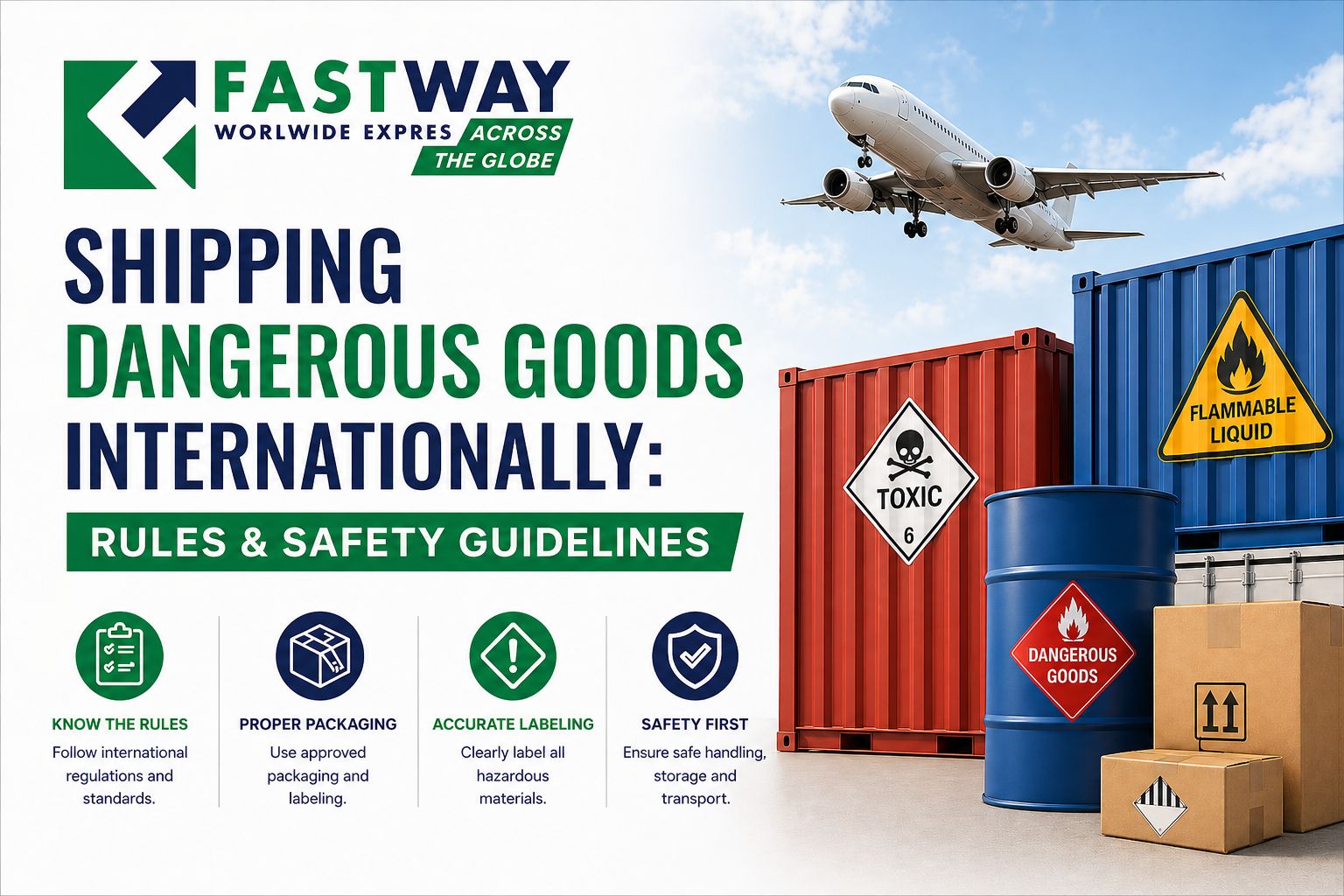
Sending some stuff overseas is not as simple as sending a regular parcel. Transporters tightly control items such as chemicals, batteries, or flammable liquids due to the danger they present. This process is where dangerous goods shipping gets very regulated and needs careful planning, correct documentation and expert handling. If you are a business exporting products or an individual shipping restricted items, knowing these rules can help you avoid delays, penalties, or rejection of your shipment.
Did You Know?
Dangerous goods are classified into 9 hazard classes globally, and each class has specific packaging, labelling, and transport requirements to ensure safety during transit.
Fastway Worldwide Express also helps its customers and provides advice on documentation, packaging requirements, and conformance procedures to ensure that shipments are handled safely and in accordance with international regulations.
Key Takeaways
- Dangerous goods require strict classification and compliance
- UN-certified packaging for safety during transit
- Correct documentation prevents delays and penalties
- Proper labeling is a must for shipment approval
- Professional logistics support for a safe, stress-free delivery
What Are Dangerous Goods in Shipping?
Dangerous Goods (DG) are commodities that may pose a risk to health, safety, property, or the environment during transportation. These include flammable, poisonous, corrosive, or chemically reactive materials. Shipping hazardous materials is potentially dangerous, and their transport requires strict compliance with international safety regulations and special handling procedures.
Common examples include:
- Lithium batteries
- Aerosols and perfumes
- Chemicals and industrial liquids
- Medical or laboratory substances
A Guide to Global Dangerous Goods Regulations
Specific regulations govern the international air and sea transportation of dangerous goods to ensure the safe transport of these materials.
Air Transport Regulations (IATA DGR)
The International Air Transport Association Dangerous Goods Regulations (IATA DGR) govern the safe transport of hazardous materials by air. The rules are mandatory for international air cargo and are updated frequently to keep pace with international safety standards. These guidelines ensure the safe, regulatory-compliant, and efficient air transport of dangerous goods.
These key requirements include some of the following:
- Packaging standards
- Labeling requirements
- Documentation procedures
Sea Transport Regulations (IMDG Code)
The International Maritime Dangerous Goods (IMDG) Code applies to shipments of dangerous goods by sea. These rules are as per Merchant Shipping rules in India.
Larger shipments often use sea transport, which guarantees safe handling at ports and vessels.
Dangerous Goods Classification (9 Hazard Classes)
Correct classification is important for safe hazardous goods transport, as it determines how items are packaged, labelled, and handled. Dangerous goods are divided into nine hazard classes based on the type of risk they pose to ensure compliance and safe transport.
Some of the main examples include:
- Explosives
- Gases
- Flammable liquids
- Toxic substances
- Radioactive materials

The Process for Shipping Dangerous Goods
A structured process guarantees compliance and safe delivery.
Step 1: Identify and Classify the Goods
First, determine if your item is classified as dangerous goods. Appropriate classification is required for regulatory compliance and safe handling. Doing this step right means proper packaging, labelling, and smooth processing throughout the shipping journey.
Usually this is done by means of the Material Safety Data Sheet (MSDS), which contains:
- Hazard classification
- UN number
- Handling instructions
Step 2: Use UN-Certified Packaging
Dangerous goods shall be packed in UN-approved packaging that can withstand changes in pressure, temperature, and physical handling during transportation.
To maximise safety, a three-layer packaging system is generally used to reduce risks and to comply with international safety standards.
- Inner packaging: Primary container holding the product
- Intermediate protection: Cushioning material to absorb shocks
- Outer packaging: Strong outer box or drum for secure transport
Step 3: Labeling and Marking
Incorrect or missing labels may cause your shipment to be rejected. Labelling must be proper and must include:
- Hazard labels
- UN identification number
- Handling instructions (e.g., “Fragile”, “This Side Up”)
Step 4: Prepare Mandatory Documentation
Proper documentation is critical to ensure regulatory compliance and facilitate customs clearance. Wrong information or lack of information might cause delays or rejection of the shipment.
Key documents include:
- Dangerous Goods Declaration (DGD) – legal declaration of shipment contents
- MSDS/SDS – detailed safety information
- Air Waybill or Cargo Declaration – shipment details
Step 5: Select an Authorized Courier
Not all couriers transport dangerous goods. It is important to choose a logistics provider who has experience in the movement of regulated shipments.
Special handling guarantees:
- Compliance with international standards
- Proper documentation verification
- Safe transportation
Common Restricted or Prohibited Items
It’s essential to know the difference between restricted and prohibited items, ensuring safe and compliant international shipping. Restricted items can be shipped with the proper approvals and specialised handling; prohibited items are not allowed under any circumstances.
Always check the destination country’s regulations in advance to avoid delays, shipment rejections, or penalties.
| Restricted Items
(Require Special Handling / Approval) |
Prohibited Items
(Not Allowed for Shipping) |
| Lithium batteries – require specialised packaging | Explosives and fireworks |
| Aerosols and perfumes – classified as flammable goods | Highly radioactive materials |
| Chemical products – subject to strict handling rules | Infectious substances without authorization |
Safety Best Practices for Shipping Dangerous Goods
The best practices for shipping safely and compliantly are:
Use Approved Packaging
Always use packaging that meets international safety standards.
Ensure Accurate Labeling
Labels must clearly communicate the nature of the hazard.
Verify Documentation
Double-check all paperwork before shipment to avoid delays.
Plan Based on Transport Mode
Choose air or sea transport based on urgency, cost, and regulations.
Work with Experts
Professional logistics support minimises risk and guarantees compliance.

Critical Mistakes to Avoid in Dangerous Goods Shipping
Avoid these common errors so you can handle your shipment safely, stay compliant with regulations, and get it delivered smoothly:
- Incorrect classification of goods
- Using non-approved packaging
- Missing or incomplete documentation
- Improper labeling
- Choosing unqualified shipping providers
Ready to Ship Dangerous Goods Safely?
International shipping of dangerous goods requires expert handling, precision, and compliance. Each step from classification and packaging to documentation to carrier selection must meet global safety standards.
As global trade continues to grow, it’s more important than ever to get regulated shipments right. Fastway Worldwide Express helps customers with easy compliance, assistance with documentation, and seamless coordination for international shipments.
Plan ahead, follow the rules, and seek expert advice to ensure your shipment is safe, compliant, and delivered without any hassle.
FAQs
What are dangerous goods in shipping?
These are articles that pose a danger to safety, health, or the environment in transport.
Can I ship dangerous goods internationally?
Yes, but only if you follow strict regulations and use licensed courier services.
What documents are required for dangerous goods shipping?
You will need a Dangerous Goods Declaration, an MSDS, and shipping documents.
Are all couriers allowed to ship hazardous materials?
No, such shipments are allowed to be handled only by special couriers who are duly authorised.
What happens if I don’t follow regulations?
Your package could be detained, refused, or penalised by the authorities.